From an email link, to direct booking.
Casa Nina Flamingo sleeps 14 in Playa Flamingo, Costa Rica, and almost no villa nearby can match it. Every booking still went through Airbnb, because “Book direct” opened an email. We gave it a clear position, a site built for booking direct, and a payment route its Costa Rican company can use.
12 AUG TO 26 SEP 2026
What Casa Nina needed.
A rebuild from scratch: one new website, built to turn visits into direct bookings and to be found in search, in answer engines and by the AI crawlers behind generative search. Advertising comes next; this phase was the foundation. Four objectives set the work.
Rebuild from scratch
The previous build sat on a preview address Google doesn't index, with no analytics and no Search Console. The new site went up on the client's own domain and hosting, measured from day one.
Convert direct bookings
Lead with what almost no villa nearby can match: room for 14 across two independent units. Then replace the email link with a live calendar, an enquiry form and a payment route the company can use.
Get found in search
Structured data on every page, a generated sitemap and robots.txt, and 40 confirmed answers in FAQ schema, so Google and Bing can read exactly what the villa is.
Get quoted by AI
Answer engines and generative search quote what they can parse. Every crawler is welcome, AI crawlers included, and an llms.txt states the villa's facts in plain language.
Live, and measured from day one.
- Performance: 98 out of 100
- Accessibility: 93 out of 100
- Best practices: 100 out of 100
- SEO: 100 out of 100
- Agentic browsing: 3 of 3 checks passed
Agentic browsing is Lighthouse's experimental category for how well AI agents can read and use a page. It counts checks passed instead of scoring out of 100.
The gateway checks the company, not the card.
The villa's operating company is incorporated in Costa Rica. Merchant eligibility follows the country of incorporation, not where a guest's card was issued or where the money settles, and “supports Costa Rica” on a platform's site can mean the software only. So every gateway was checked one by one, before any booking software was chosen.
Stripe
Ruled outA Costa Rican company can't open an account.
Lodgify
Ruled outIts payment gateways wouldn't onboard the company.
OwnerRez
SelectedProcessor-agnostic, with gateways that accept Costa Rican merchants and two-way sync with the existing Airbnb listings.
Tilopay
Fast startAbout 48 hours to set up, with payment links, Apple Pay and SINPE.
Powertranz
Longer-term routeNative card checkout inside OwnerRez with 3-D Secure, with onboarding led by the client's bank.
Today the site takes direct enquiries against a live calendar, with payments to follow through OwnerRez.
6 platforms. One system.
Versioned in GitHub, previewed on Vercel, live on the Spaceship hosting the client already had. One entity file feeds every page's schema, an llms.txt describes the villa for AI assistants, and Search Console and Bing Webmaster Tools show how both engines read it.
Seven pages, built by hand.
HTML, CSS and vanilla JavaScript, no framework. Every claim on the site traces to an approved facts bank, and anything unconfirmed stayed off it.
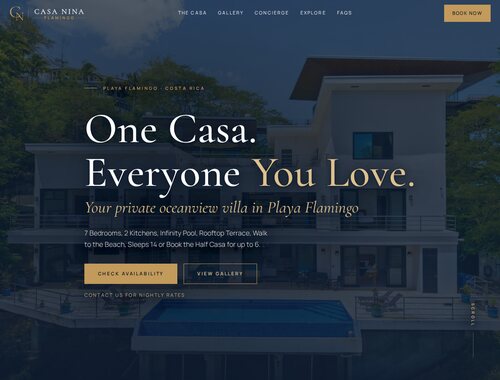
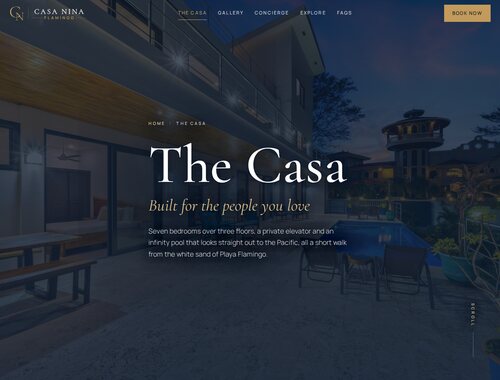
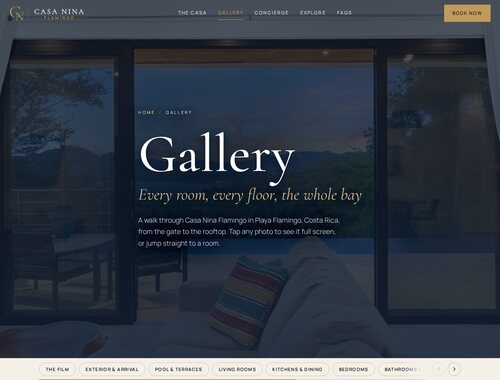
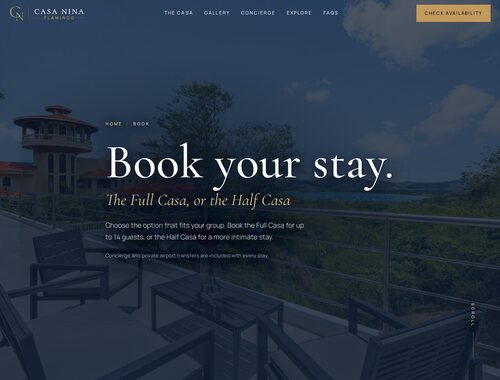
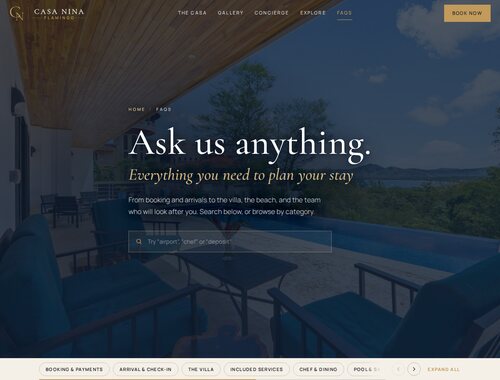
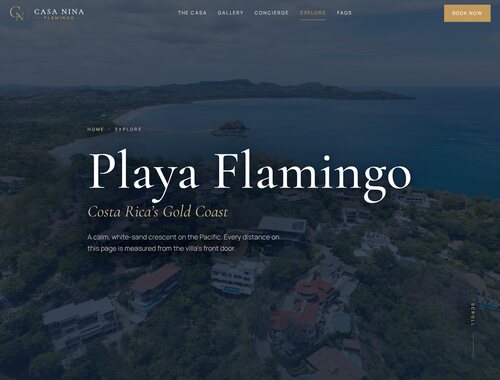
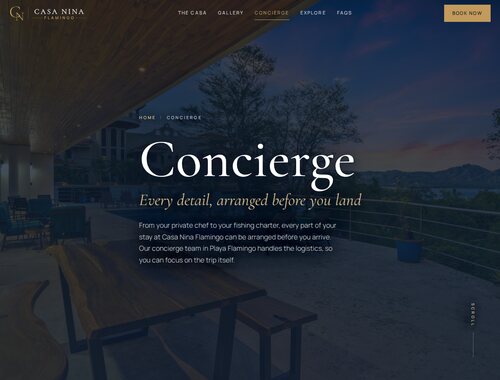
Diagnose. Engineer. Compound.
Forty-five days from breaking ground to launch, all of it foundation. Advertising is the next phase, and it builds on this one.
Diagnose
Aug 2026The audit found a site Google couldn't index, a booking button that opened an email, and no trust content or measurement. A neighbouring villa's site showed what wins here: a claimed category and a system underneath it.
Engineer
Aug to Sep 2026A new site, built from scratch by hand and written to one voice prompt, down to a seasonal calendar checked against 26 sources. Its schema, sitemap, robots.txt and llms.txt were built for search engines and AI crawlers alike. The client's review round logged 43 changes, all applied before launch.
Compound
26 Sep 2026 →Launched on the Spaceship hosting the client already paid for, so the domain, nameservers and mailbox never moved. GA4 and Search Console were live from day one, with Bing Webmaster Tools reporting alongside. Next: advertising, starting with paid search and remarketing, and payments to follow through OwnerRez.